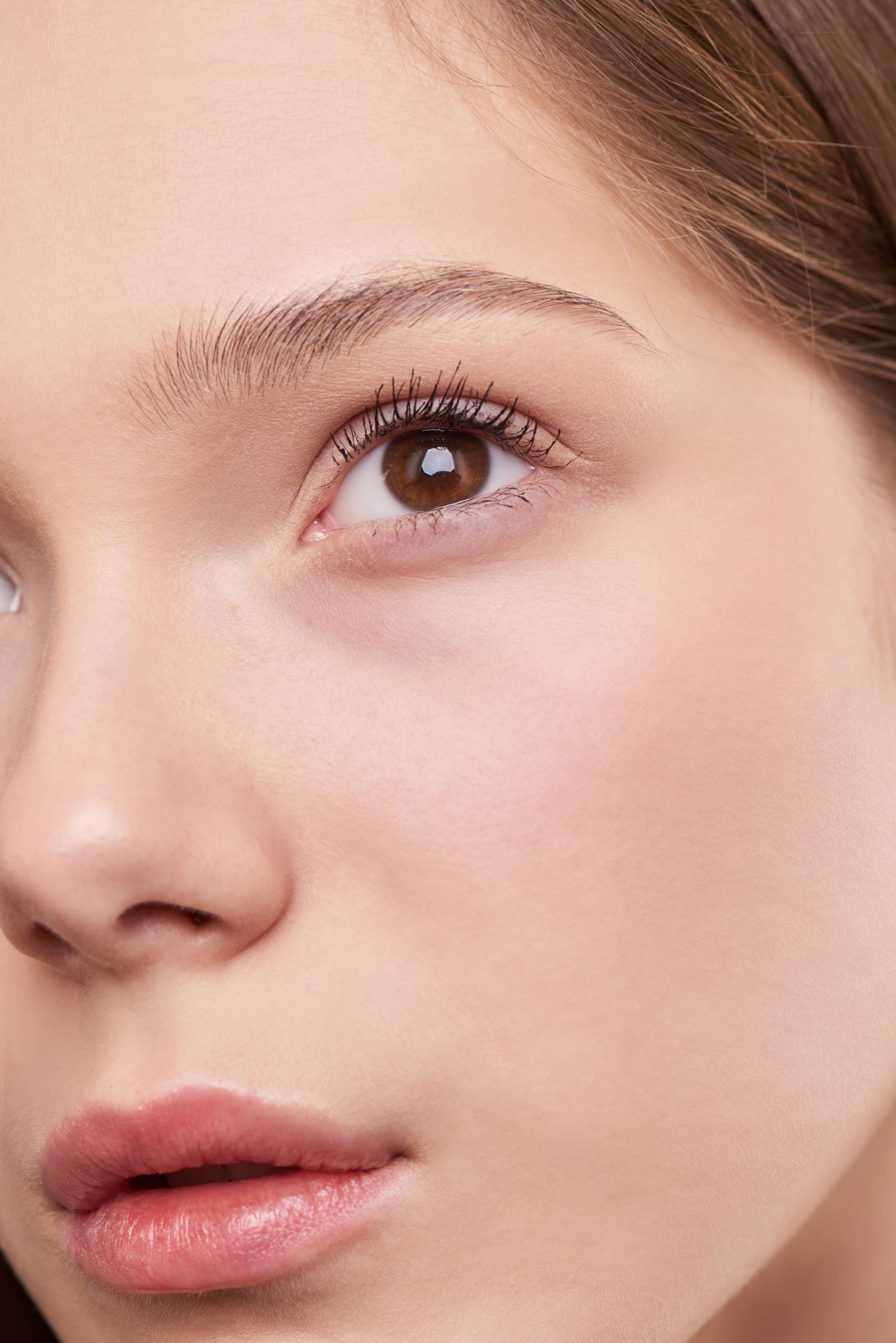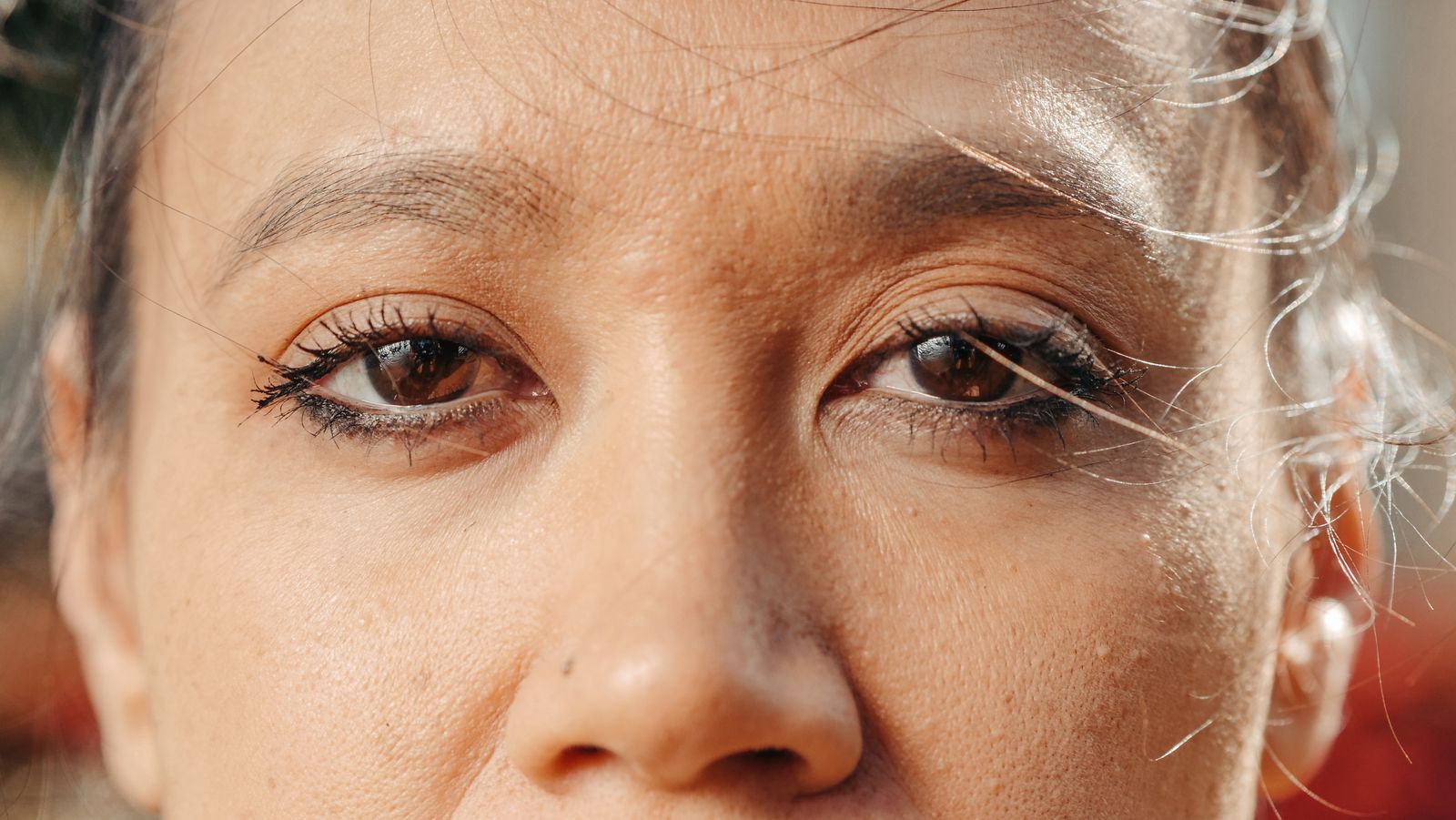
Dark circles under the eyes usually come from one of three things: pigmentation within the skin, shadow cast by volume loss in the tear trough, or thin skin that allows the vessels beneath to show through. Lifestyle and medical factors can worsen all three. Treatment tends to disappoint unless the dominant cause is identified first.
How can I tell which type of dark circles I have?
The two checks below are rough indicators rather than a diagnosis, and no at-home test replaces a face-to-face assessment. I use the same observations, alongside examination in controlled lighting, when assessing patients at our clinic at 2 Wimpole Street, within the Harley Street medical district.
The stretch or pinch test
In good natural light, gently stretch the skin of the lower eyelid sideways, without pulling hard. If the dark colour stays exactly as it was, pigmentation is likely to be a significant part of the picture. If the darkness fades as the skin is drawn flat, the colour is more likely to be coming from vessels visible through thin skin. If little changes but the hollow remains obvious, structure and shadow are probably dominant.
The lighting or torch test
Shine a small torch, or a phone light, upwards onto the face from below chin level. Keep the light below the level of the eye and do not shine it directly into the eye. Look ahead rather than at the light. Shadow from a hollow tear trough will lighten or disappear as the light fills the groove from underneath. Pigmentation looks much the same whatever angle the light comes from, whereas overhead lighting deepens a structural hollow considerably.
Both tests have limits. They say nothing about why pigmentation is there, they cannot measure how thin the skin is, and they mislead when more than one cause is present.
What causes pigmented dark circles?
Genetic and constitutional pigmentation runs strongly in families and is considerably more common in people with richer skin tones, including patients of South Asian, Middle Eastern, Mediterranean, East Asian and African heritage. It often appears in adolescence, affects both sides evenly, and is frequently visible in a parent or sibling.
Post-inflammatory pigmentation occurs where skin has been repeatedly inflamed and lays down extra pigment as it settles. Eczema around the eyes, persistent rubbing, harsh cleansing, reactions to eye products and unprotected sun exposure all contribute. It develops later and follows the history of the irritation.
Pigment responds to pigment-directed care, not to injectables: daily broad-spectrum sun protection, stopping whatever irritation is driving it, and a topical regimen chosen with a clinician and introduced cautiously, because the skin here is easily irritated and an irritant reaction can deepen the pigmentation further. Allow three to six months before judging a regimen, and expect partial rather than complete improvement. Filler will not lighten pigment, and skin-quality treatments may make pigmented skin look fresher without removing the pigment.
What causes shadowed dark circles?
Shadow is an optical effect rather than a colour change. As the face ages, the fat pads of the mid-face descend, ligaments loosen and the bony orbital rim remodels, leaving a groove between the lower eyelid and the cheek. Light from above casts a shadow across that groove, while the skin itself may be a normal colour.
Where a genuine, isolated hollow is dominant, carefully placed filler is one option that addresses the structural cause. Surgical approaches such as fat repositioning or lower eyelid surgery also address it, and where there is significant fat herniation or marked skin laxity, a surgical opinion is more appropriate than an injectable. Filler also carries the highest risk of the routes here. The tear trough is unforgiving and the product sits close to the surface. Recognised complications include puffiness, a bluish tint and fluid retention. Rarely, injection near the vessels around the eye can block a blood vessel, which may cause skin damage or, very rarely, permanent loss of vision. This is why the area should only be treated by an experienced injector working in a setting equipped to manage complications.
Tear trough filler does not suit everyone. It is generally avoided where there is existing puffiness or malar oedema, where the lower lid is lax, where the eye bag is caused by herniated fat rather than a hollow, and in patients prone to fluid retention, because filler in these situations tends to make the area look heavier rather than better. An injector should plan conservatively and be willing to tell you that you are not a suitable candidate. I have set out the detail in a guide to choosing between polynucleotides and tear trough filler.
The warning runs the other way as well. If your problem is genuine structural shadow, skin-quality treatments will disappoint you. They improve texture and thickness, but they cannot fill a groove.
When are dark circles a skin quality problem?
Under-eye skin is around a quarter the thickness of cheek skin, which is why what lies beneath it shows so readily. When it thins further with age, sun damage or genetics, it becomes translucent, and the small vessels beneath appear as a blue, purple or greyish tint. The colour is not in the skin; it is being seen through it.
Thin, translucent skin is the presentation that responds most predictably to polynucleotide treatment. Polynucleotides address this by thickening the skin itself, which is why they suit translucency rather than shadow. They are derived from fish DNA, so they are not suitable for anyone with a fish or seafood allergy. They are also not offered in pregnancy or while breastfeeding, where there is active infection or inflammation around the eye, or without prior assessment in patients with autoimmune or bleeding disorders. I have written about the science behind polynucleotides in more depth, and about their use for under-eye dark circles.
Course length, timings and pricing are set out on the polynucleotide treatment page. Responses vary, and where thin skin sits over a deep hollow, polynucleotides soften the appearance without removing the shadow.
Can dark circles be caused by something other than my skin?
Yes, and this category is the one most often skipped. Several health and lifestyle factors darken the under-eye area, and no injectable corrects any of them.
- Sleep. Short or poor quality sleep causes pallor and fluid shifts that make shadows and vessels more obvious. It rarely creates dark circles alone, but it reliably worsens them.
- Allergy and nasal congestion. Persistent rhinitis impedes venous drainage around the eyes, and treating it often helps more than anything cosmetic would.
- Iron levels. Low iron and anaemia cause pallor that makes vessels beneath thin skin far more visible, and it is worth testing.
- Thyroid function. Underactive and overactive thyroid disease can both alter the tissue around the eye and fluid balance.
- Dehydration, alcohol and smoking. Each affects skin quality and circulation, and this area shows it early.
If your dark circles appeared suddenly, affect one side only, come with swelling, or arrived alongside symptoms such as fatigue or weight change, please see your GP before considering aesthetic treatment.
What if I have more than one cause?
Most patients do. A common presentation is thin skin with some constitutional pigmentation and a mild hollow, worsened by disrupted sleep and untreated hay fever. Treating one element in isolation produces a partial result, which is why a staged plan works better.
The sequence I generally favour is this. Address the medical and lifestyle contributors first, because they cost nothing and they change the baseline. Establish sun protection and pigment-directed skincare next, and give it three to six months. Then treat skin quality, since improving the skin often reduces how much structural correction appears necessary. Only after that, if a hollow remains and still bothers you, is it sensible to discuss volume.
Some patients are also better served by no injectable treatment at all. If your dark circles are almost entirely constitutional pigmentation, or your expectations sit beyond what these treatments realistically achieve, the honest recommendation is skincare, sun protection and patience. Declining to treat is sometimes the most useful thing a practitioner can do.
If you would like an honest assessment of what is causing your dark circles, and a plan that begins with the cause rather than the most obvious treatment, I would be happy to see you.
Book a consultation at 2nd Floor, 2 Wimpole St, London W1G 0EB. All consultations are £50, fully redeemable against your treatment.
Related reading: polynucleotides for under-eye dark circles, polynucleotides compared with tear trough filler and the science behind polynucleotides.
Your £50 consultation fee is fully redeemable against your treatment.