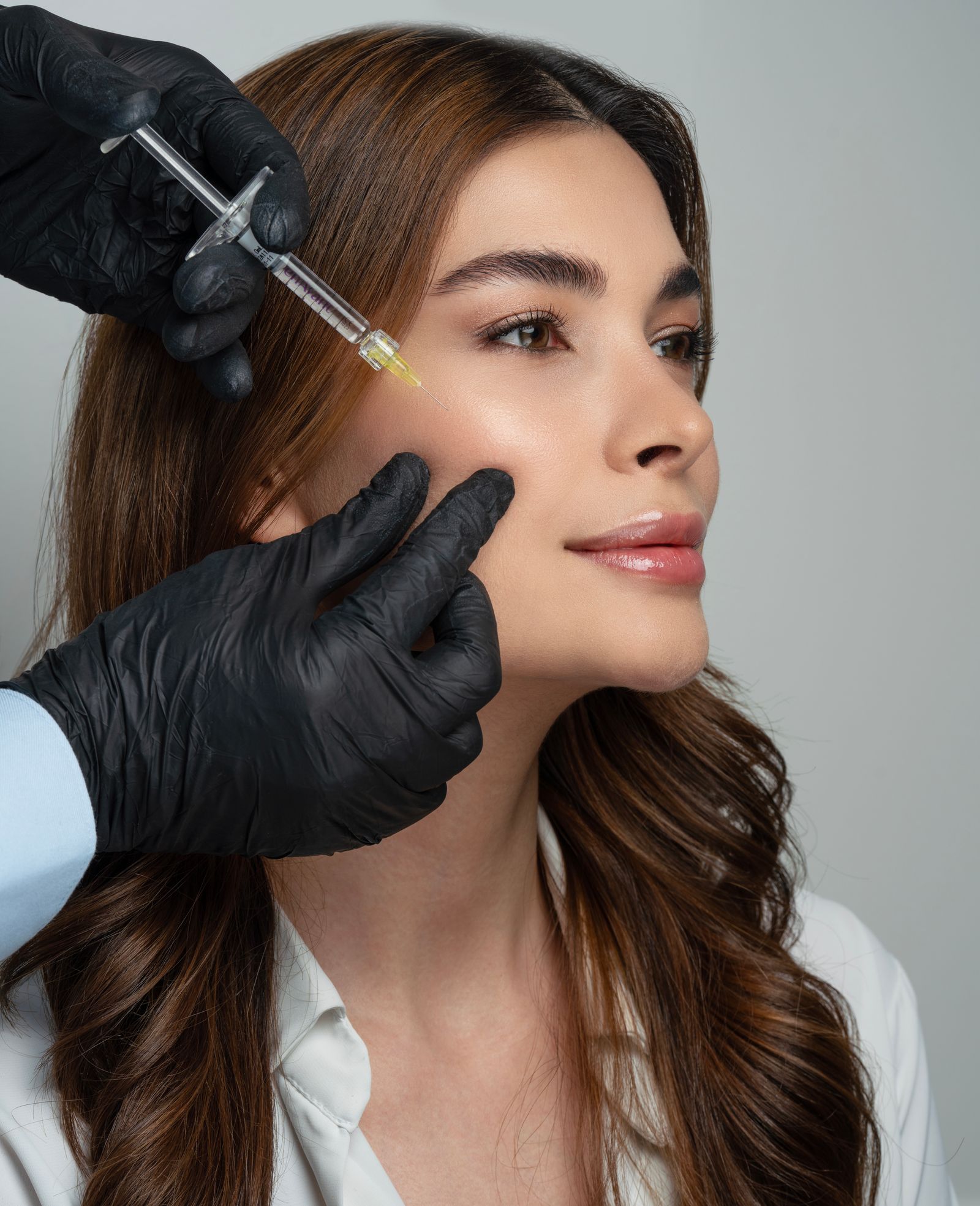
Reaching a healthier weight is a genuine achievement. Yet a pattern I see regularly in clinic is this: after significant weight loss, the body looks better but the face can look older. Cheeks that were once full appear flat, the temples hollow, the jawline softens, and the under-eye area looks tired no matter how well rested you are.
This concern is one of the most common reasons patients book an assessment at our Wimpole Street clinic in the Harley Street medical district. In this guide I explain where the signs appear first and how collagen-stimulating and volume-restoring treatments can rebuild facial structure gradually and naturally.
Why the Face Can Change After Significant Weight Loss
Every face is different, and I am careful not to make assumptions about why an individual face has changed. What I can describe is the pattern I see in clinic. After significant weight loss, patients most often point to the temples, the cheeks and mid-face, the jawline and the under-eye area. These are the same areas where age-related volume loss tends to show, which is why the change so often reads as looking older rather than slimmer.
Age itself often plays a part. Collagen production naturally slows with age, so skin firmness and facial support are frequently already changing in the background. When a reduction in facial fullness arrives on top of that, the combined effect can be a face that looks more tired and drawn than you feel. The encouraging news is that this pattern of volume loss and skin laxity is exactly what collagen-stimulating treatments are designed to address.
The Signs: Where Facial Volume Loss Shows First
Temples
Volume loss at the temples is one of the earliest and most ageing changes. Hollowing here creates a gaunt or drawn appearance and makes the transition between the forehead and cheekbone look harsh rather than smooth.
Cheeks and mid-face
The mid-face can lose its natural projection and fullness, flattening the cheek and casting shadows that read as tiredness. As mid-face support reduces, the nasolabial folds and marionette lines often appear deeper, not because new lines have formed but because the volume above them has fallen.
Jawline and lower face
Reduced volume and early skin laxity in the lower face soften jawline definition and can create the appearance of early jowling, where tissue gathers either side of the chin.
Under-eyes
Many patients also describe hollowness or shadowing under the eyes that makes them look permanently tired, however well they sleep. This is a delicate area that I never assess from photographs, and I always examine it in person before recommending any approach.
Why Does My Face Look Gaunt When My Body Looks Healthier?
A face that has lost fullness at the temples and cheeks can read as tired, drawn or hollow, even on days when you feel healthier than you have in years. The contrast can feel unfair, and it is entirely reasonable to want your face to reflect how well you actually feel.
How Facial Restoration Works
Restoring a face after significant weight loss is not about adding volume everywhere. It is about rebuilding structural support where it has been lost and improving the quality of the skin that sits over it. At DimAllure I use two complementary approaches, and where a single area needs immediate, targeted volume, hyaluronic acid dermal fillers can also play a supporting role.
Collagen stimulation for structural support
For rebuilding the structural support of the face, I most often recommend Sculptra collagen stimulation in London. Sculptra is made from poly-L-lactic acid, a biocompatible and biodegradable material, and it works fundamentally differently from traditional dermal fillers. Rather than adding instant volume, it is injected deep into the skin where it acts as a scaffold for new collagen formation. Your body gradually replaces it with its own natural collagen, creating structural support and subtle volume restoration from within.
The most common areas I treat with Sculptra are the temples, the mid-face and cheeks, and the jawline and pre-jowl area: the same areas where patients notice change after significant weight loss. Because the volume is created by your own collagen, the result integrates with your facial tissue without the overfilled appearance that can occur with large volumes of dermal filler.
When I assess suitability for Sculptra, I look for volume loss in the temples, cheeks or mid-face, early skin laxity around the jawline, a tired, drawn or hollow appearance, and thinning skin that has lost its firmness. These are often the very concerns patients raise after significant weight loss, although suitability is always assessed individually.
Most patients require 2 to 3 sessions, spaced 4 to 6 weeks apart. Results are not instant: most patients begin to notice subtle improvements in skin firmness and facial contour over the following 4 to 8 weeks as the body produces new collagen, and full results typically develop over 3 to 6 months. Results can last up to 24 months.
Skin quality and hydration
Structure is only half of the picture. Many patients who come to me about facial volume also describe skin that looks dull, dehydrated or tired. For this I frequently recommend skin booster treatment in London alongside structural work; many patients combine skin boosters with Sculptra to address both skin quality and facial support.
Skin boosters deliver micro-deposits of soft, flowable hyaluronic acid across broader areas of the skin, deeply hydrating the dermis and creating an environment that supports collagen and elastin production. They do not add volume or change your facial shape. They improve texture, elasticity and radiance, which is precisely what a tired-looking complexion needs alongside restored structure.
A course of 2 to 3 sessions, spaced 3 to 4 weeks apart, is typically recommended. You may notice improved hydration and a subtle glow within the first week, with full results developing after the course. Results typically last 6 to 9 months, and many patients maintain the effect with a single top-up session every 6 months.
How Long Does Facial Restoration Take?
I am always honest about timelines. Collagen stimulation is deliberately gradual: most patients begin to notice changes within the first 4 to 8 weeks, and the full result typically develops over 3 to 6 months.
Patients sometimes worry that gradual means underwhelming. In practice, the opposite tends to be true. Friends and colleagues often notice that you look refreshed and well rested, but they cannot pinpoint what has changed. For patients whose weight change was itself very visible, that subtlety is usually exactly what they want.
What Does Facial Restoration Cost?
Sculptra starts from £600 per vial, and most patients require 2 to 3 vials across their treatment course. Skin boosters start from £300 per session. Every consultation is £50 and fully redeemable against your treatment, and you can review the full treatment price list before you book.
Why the Consultation Comes First
No two faces lose volume in the same way, and no responsible treatment plan can be made from a photograph. During a face-to-face consultation I assess your facial anatomy, review your medical history, discuss your goals, and explain honestly what treatment can and cannot achieve. Some patients need structural support alone, some benefit most from skin quality work, and many do best with a staged combination. I will discuss any contraindications with you before we plan anything.
If your face has changed after significant weight loss and you would like to understand your options, an assessment is the right place to start.
Book a consultation at 2nd Floor, 2 Wimpole St, London W1G 0EB. All consultations are £50, fully redeemable against your treatment.
DimAllure
2nd Floor, 2 Wimpole St, London W1G 0EB
Personally administered by Dima Alomar, GPhC-registered Clinical Prescriber Pharmacist
Book your consultation →
Related reading: how long Sculptra results last and Sculptra compared with dermal fillers.
Your £50 consultation fee is fully redeemable against your treatment.