Lip filler migration is one of the most common concerns I see in clinic. Patients arrive worried that the lip border has become blurred, or that a soft fullness has appeared above the lip line. If that sounds familiar, there is one reassuring fact worth knowing straight away: most lip filler is made from hyaluronic acid, and hyaluronic acid filler can be dissolved.
I am Dima Alomar, a GPhC-registered Clinical Prescriber Pharmacist, and I carry out every filler dissolving and correction treatment personally at our Wimpole Street clinic in the Harley Street medical district. In this guide I explain what migration looks like, how I assess it, and how it is corrected.
What is lip filler migration?
Lip filler migration describes filler that has moved from where it was originally placed. In the lips, this most commonly means filler migrating above the natural lip border, so that fullness sits in the skin above the lip rather than within the lip itself.
Migration does not mean anything is permanently wrong. Because the filler is hyaluronic acid, the migrated product can usually be removed, and once it has been dissolved the area returns towards its natural state.
What are the signs of lip filler migration?
The pattern I see most often in clinic centres on the lip border:
- A blurred lip border. The clean line between the lip and the surrounding skin softens, so the outline of the lip looks less defined than it once did.
- Fullness above the lip line. Filler sitting above the natural border can make the area between the lip and the nose look puffy or raised.
Timing matters here. Some swelling, tenderness, and occasionally minor bruising is normal in the first 24 to 48 hours after lip filler, and the lips can look fuller than the final result at first. The true result is visible after about two weeks. If a concern is still there once that settling period has passed, an in-person assessment is the most reliable way to find out what is going on.
Why has my lip filler moved?
This is the question I am asked most often, and it deserves an honest answer: not every filler journey goes to plan, and it is not always possible to say with certainty why filler has ended up where it has in any individual case. Rather than speculate, I assess the lips in person, because the right next step depends on what I find, not on why the filler moved.
What I can say is that migration is only one of several reasons patients seek correction. Overfilled or unnatural results, with too much filler or a loss of natural facial proportion, are just as common, and so are lumps and unevenness. Overfilling is also the reason lip filler sometimes gets a bad reputation, which is why my own approach to lip filler in London is deliberately conservative. I often build gradually over more than one appointment rather than overfilling in a single session, because the aim is lips that suit your face and move naturally.
The lips are also a delicate, high-risk area, which is why your choice of injector matters more than the price.
How is migrated lip filler corrected?
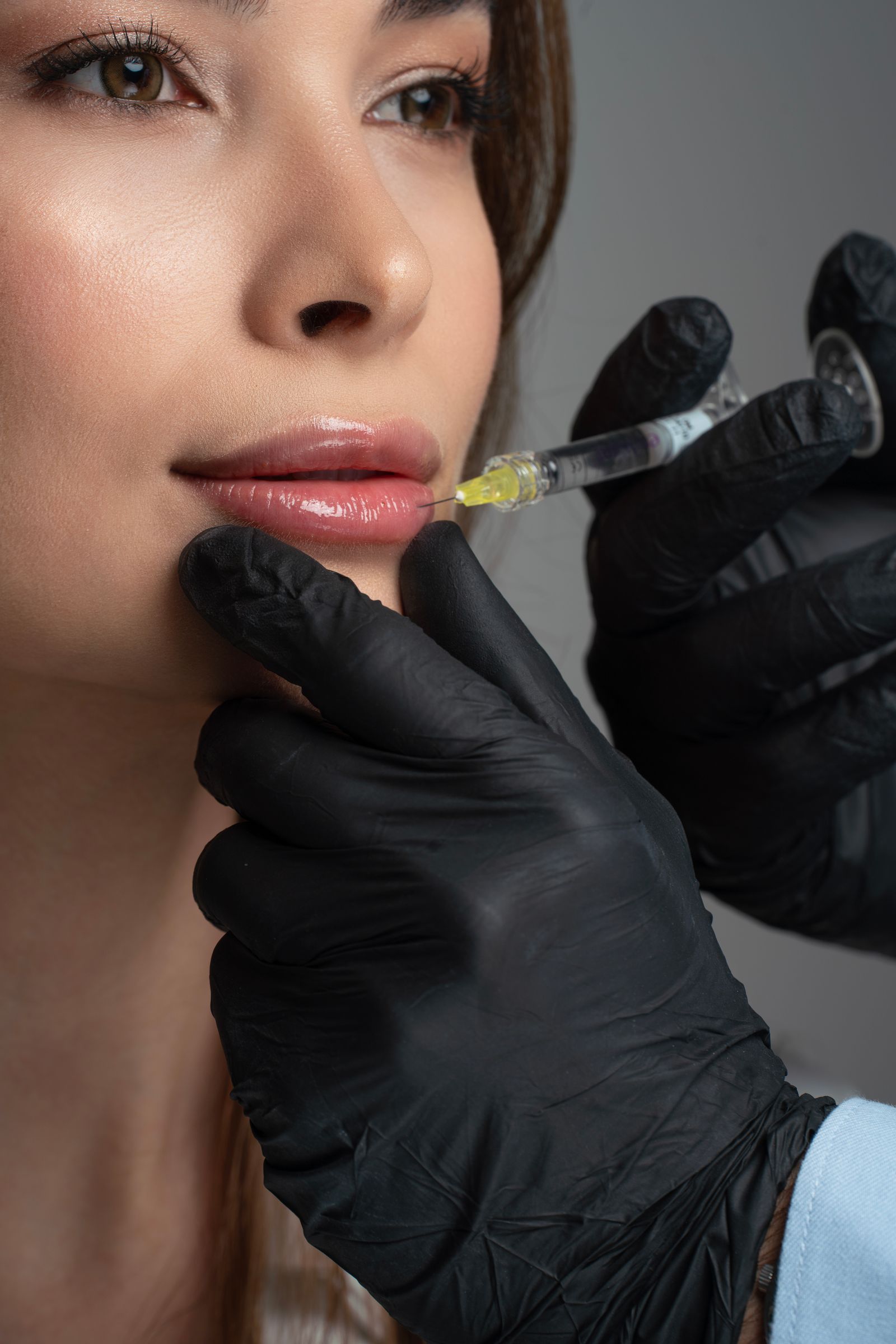
Migrated hyaluronic acid filler is corrected by dissolving it. A dissolving enzyme gently breaks down the filler so your body can naturally clear it. This enzyme has been used in medicine for decades. Dissolving is a prescription-only treatment, so it can only go ahead after a face-to-face assessment by a qualified medical prescriber.
What happens at the appointment?
Your treatment begins with a thorough consultation and assessment. Where appropriate, a patch test is carried out beforehand to check for any sensitivity to the enzyme. On treatment day, the enzyme is injected precisely into the areas of unwanted filler, and the treatment itself takes around 15 to 30 minutes.
What happens afterwards?
You can expect some swelling, redness, and occasionally bruising in the first 24 to 48 hours. As the filler dissolves, the area will look softer and may appear deflated at first, since both the filler and any volume it was creating are removed. This settles as the swelling subsides, and it is not a sign that anything is wrong.
When will I see the result?
Most people see results within 24 to 48 hours, with the full effect visible in one to two weeks. Stubborn or larger amounts of filler may need a second session, so correction typically takes one to two sessions in total.
Why prescriber-led correction matters
Filler dissolving is not a treatment to take lightly, and it is not one that every injector can legally perform. The dissolving enzyme carries a small risk of allergic reaction, requires careful dosing, and demands a thorough understanding of facial anatomy to dissolve the right filler without affecting your natural tissue.
As a GPhC-registered prescriber, I am qualified to assess, prescribe, and perform this treatment, and to manage a reaction in the rare event that one occurs. Many of my correction patients were treated at another clinic. If that is you, please do not feel awkward. My job is to assess your concern honestly and explain what is realistic.
Can I have new lip filler after dissolving?
Yes. Many patients treat dissolving as a fresh start, removing old filler before beginning again with a new, considered plan. If you would like fresh filler once the migrated product has been removed, I usually recommend waiting around two weeks after dissolving so the area can settle fully before any new treatment.
When you are ready, new lip filler at DimAllure starts from £350 per ml, and most lip filler lasts between 9 and 18 months depending on the product used and your individual metabolism.
Does dissolving work on every type of filler?
The dissolving enzyme works on hyaluronic acid filler, which is the most common type used for lips, cheeks, and tear troughs. It does not dissolve non-hyaluronic-acid fillers such as collagen stimulators.
If you are not sure which product you were treated with, I will confirm during your consultation whether your filler is suitable for dissolving. You can read more about how hyaluronic acid restores volume and structure on our dermal fillers in London page.
What does filler dissolving cost?
Filler dissolving and correction at DimAllure starts from £200 per area, and correction typically takes one to two sessions. You can read full treatment details, including who the treatment suits and what to expect, on our filler dissolving and correction page. The process is the same whether your original filler was placed at DimAllure or at another clinic.
Worried about your lip filler? Start with an honest assessment
If you think your lip filler has migrated, or you are simply unhappy with a previous treatment, an honest medical opinion is the right first step. I will assess the area, explain your options clearly, and recommend the most appropriate way forward, whether that is dissolving, a staged correction, or no treatment at all.
Book a consultation at 2nd Floor, 2 Wimpole St, London W1G 0EB. All consultations are £50, fully redeemable against your treatment.
DimAllure
2nd Floor, 2 Wimpole St, London W1G 0EB
Personally administered by Dima Alomar, GPhC-registered Clinical Prescriber Pharmacist
Book your consultation →
Related reading: our guide to lip filler cost in London and Sculptra versus dermal fillers.
Your £50 consultation fee is fully redeemable against your treatment.