Every summer I meet patients who have quietly organised their lives around sweating. They buy dark clothing, keep a spare shirt at work, avoid raising their arms in meetings, and plan journeys around staying cool. Many have never mentioned it to a health professional, because sweating feels like something you simply have to put up with.
You do not. Excessive sweating, clinically known as hyperhidrosis, is a recognised medical concern, and it affects far more people than is often acknowledged. There is a sensible ladder of everyday measures worth trying first, and when those measures are not enough, there is an effective in-clinic option. This guide covers both, in that order, because in my view clinical treatment should be a considered step rather than a first resort.
Is It Normal Summer Sweating or Hyperhidrosis?
Everyone sweats more in hot weather. That is normal temperature regulation, and it does not need treating. Hyperhidrosis is different: the sweat glands are overactive. Signs that your sweating may sit beyond the normal range include:
- Sweating through clothing despite normal activity levels
- Finding antiperspirants ineffective or insufficient, however carefully you use them
- Feeling self-conscious about visible sweat marks or odour
- Avoiding certain fabrics, colours or social situations because of sweating
In summer, lighter clothing and fewer layers make sweating much harder to conceal, which is why so many people first look for help at this time of year. If several of the signs above feel familiar to you whatever the season, it is worth reading on.
Start with the Everyday Ladder
Before considering any clinical treatment, it is worth working through the practical measures below. For some people they are enough on their own, and even for those who eventually choose treatment, they remain useful habits.
Step one: try a higher-strength antiperspirant
If a standard antiperspirant is not holding, pharmacies sell higher-strength formulations, often labelled as clinical or maximum protection. Use them exactly as the packaging directs, and if anything about the product is unclear, ask the pharmacist. As a pharmacist myself, I can tell you that questions about antiperspirants are entirely routine, and a short conversation at the counter can save weeks of trial and error.
Step two: choose fabrics that work with you
Clothing cannot stop sweating, but it changes how visible and how uncomfortable it is. Natural, breathable fibres such as cotton and linen allow sweat to evaporate rather than sit against the skin, and looser cuts help air circulate. Very dark and very light colours show sweat marks far less than mid-tones such as grey, and patterns disguise them further. Many patients find moisture-wicking sportswear useful for commutes, changing on arrival, and keeping a spare shirt at work removes a layer of worry on difficult days.
Step three: practical daily measures
- Cool showers rather than hot ones, particularly before stressful events
- Disposable or washable underarm liners, which protect clothing discreetly
- Planning outfits for high-stakes days in advance rather than deciding in the moment
- Keeping a simple note of when your sweating troubles you most; if you later seek professional advice, that record is genuinely useful at a consultation
When Antiperspirants Are Not Enough
If you have worked through the measures above and you are still sweating through clothing, still avoiding certain colours, or still organising your day around the problem, it is reasonable to consider clinical treatment. In my experience the tipping point is rarely the sweat itself. It is the mental load: the constant checking, the planning, the situations avoided. When a manageable inconvenience becomes something that shapes your choices, it is worth addressing properly.
How the In-Clinic Treatment Works
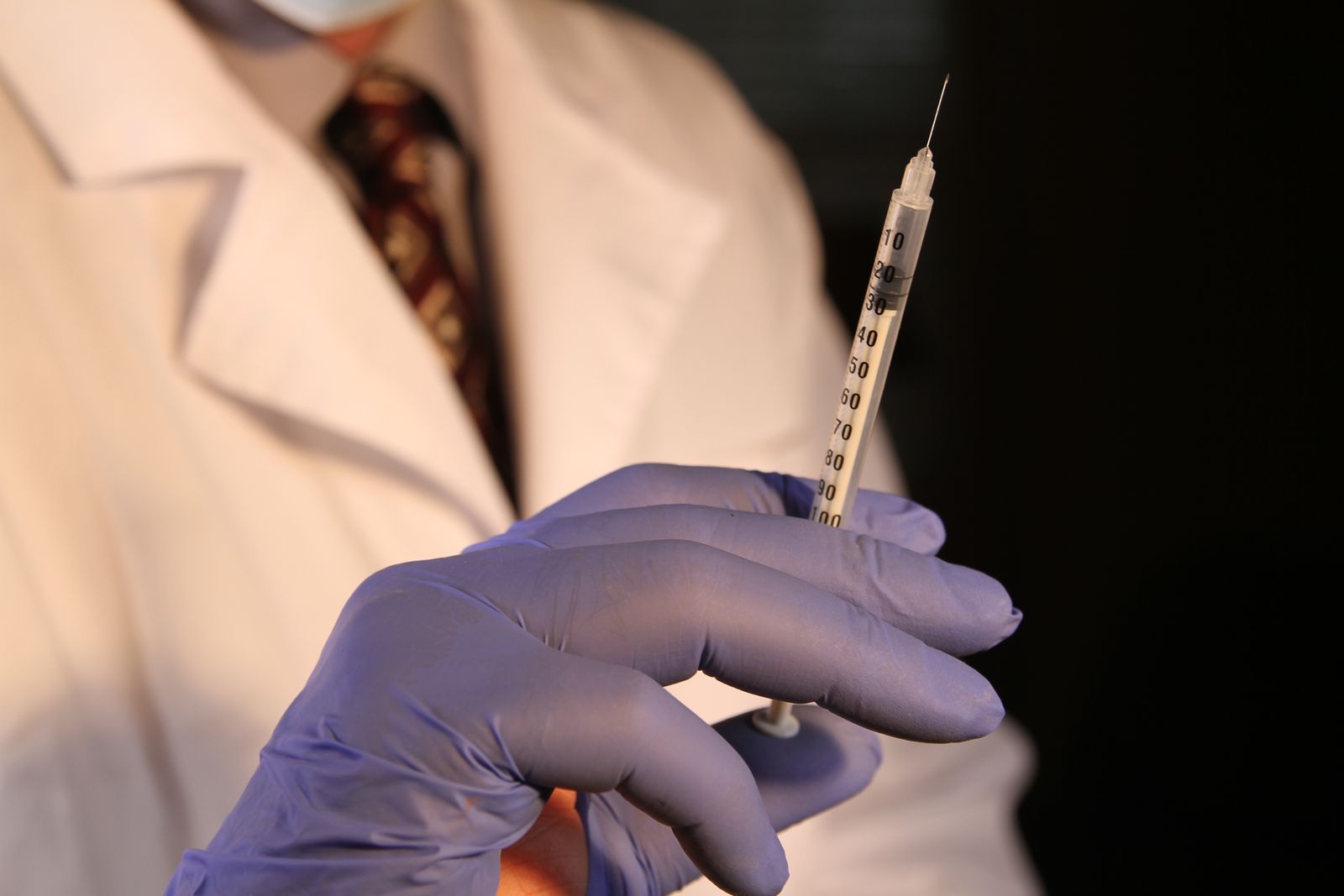
At DimAllure I offer excessive sweating treatment in London for the underarms. It uses the same purified protein used in our anti-wrinkle treatments, which temporarily blocks the nerve signals between your nerve endings and your sweat glands. When those signals are blocked, the sweat glands in the treated area effectively stop receiving the instruction to produce sweat, and sweating in that area is significantly reduced, typically by 80 to 90% within two weeks of treatment.
The treatment is highly localised: only the area treated is affected, and your body's overall ability to regulate temperature is unaffected. Other areas of the body continue to function normally. The treatment does not eliminate sweating entirely, and I would be wary of any clinic that promises it will.
Every appointment takes place at our Wimpole Street clinic in the Harley Street medical district, and I personally administer every treatment.
What to Expect at Your Appointment
We begin with a consultation. I will discuss your symptoms, medical history and treatment goals, and confirm that hyperhidrosis treatment is right for you. The consultation is £50 and fully redeemable against your treatment.
On treatment day, the underarm area is cleansed and a topical anaesthetic is applied for comfort. A series of small, shallow injections is then placed across the affected area in a precise grid pattern. The procedure takes approximately 30 to 45 minutes.
There is no significant downtime. You may notice mild redness or tenderness at the injection sites, which typically settles within a few hours, and you can return to normal activities immediately. I do ask you to avoid intense exercise, hot baths and saunas for 24 hours.
How quickly will I notice a difference?
Results typically begin to develop within 3 to 7 days, with the full effect usually visible at approximately two weeks. A complimentary review appointment at two weeks is included with every treatment. If you are planning around a holiday, a wedding or a season of events, it is sensible to book at least two weeks ahead so the full effect has time to develop.
How long do the results last?
Results typically last four to six months from a single session. Many patients return for repeat treatment before the effect fully wears off, maintaining consistent control over their symptoms. For patients whose main concern is the warmer months, a session in late spring is usually still working at the end of summer.
Which areas can be treated?
Treatment at DimAllure is offered for the underarms, where it is most effective and best supported by clinical evidence. Treatment of the palms, soles or scalp may be available on a consultation basis, and I will discuss suitability during your appointment.
Is the treatment suitable for everyone?
No. Hyperhidrosis treatment is not suitable during pregnancy or breastfeeding, or for patients with certain neuromuscular conditions. All suitability criteria are discussed at consultation, which is one of the reasons I will never offer this treatment without one.
How Much Does Excessive Sweating Treatment Cost?
Hyperhidrosis treatment at DimAllure starts from £400 per session. Because a single session typically lasts four to six months, many patients find it a cost-effective answer to a concern they have been quietly managing, and paying for in ruined clothing and daily effort, for years.
If you are unsure whether your sweating sits within the normal range or is something worth treating, that uncertainty alone is a good reason to ask. You can contact the clinic with any questions, or book a consultation and we will assess it together. There is never any obligation to proceed with treatment.
Book a consultation at 2nd Floor, 2 Wimpole St, London W1G 0EB. All consultations are £50, fully redeemable against your treatment.
DimAllure
2nd Floor, 2 Wimpole St, London W1G 0EB
Personally administered by Dima Alomar, GPhC-registered Clinical Prescriber Pharmacist
Book your consultation →
Related reading: the best anti-ageing injectables for your 30s, 40s and 50s.
Your £50 consultation fee is fully redeemable against your treatment.